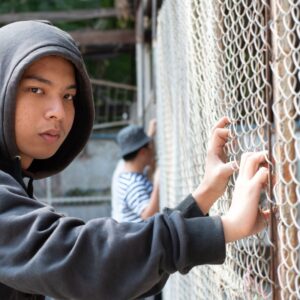
Justice for children encompasses legal measures to protect their rights and welfare, extending beyond criminal contexts. It includes principles of child-friendly justice from international standards, covering non-criminal court proceedings, such as public law cases involving local authorities and private law cases within family life.
An integral part of achieving the rule of law and its related objectives lies in the treatment of children by national legal, social, and judicial systems and security institutions.
Children are traditionally excluded from the right to vote, with a few exceptions, such as in countries where the voting age is sixteen. The main reason is the belief that children lack the competencies necessary to make informed decisions.
Every year, thousands of children come into contact with the justice system. They may be involved in criminal justice proceedings due to conflicts with the law, or because they witnessed or became victims of crimes, or a combination.
Juvenile law is a complex and multifaceted area of legal practice that addresses the intersection of the legal system with the unique needs and circumstances of minors. Understanding juvenile law is crucial for building healthy societal foundations.
With 1.3 to 1.5 million children detained annually, the failures of juvenile justice systems are unfortunately evident. States must rigorously enforce juvenile justice principles to protect children from the violent and harmful conditions of custody.
The significant number of detained children points to the urgent need for heightened awareness and concerted efforts toward safeguarding the rights and well-being of these vulnerable youths.
Surrogacy is an arrangement in which a woman commits to carrying and birthing another person or couple’s child. The process is facilitated by new technologies that offer parents the opportunity to have biological children despite complications.